
January 8, 2021
The 8:08 call: How we use quick, daily check-ins to keep the croux connected
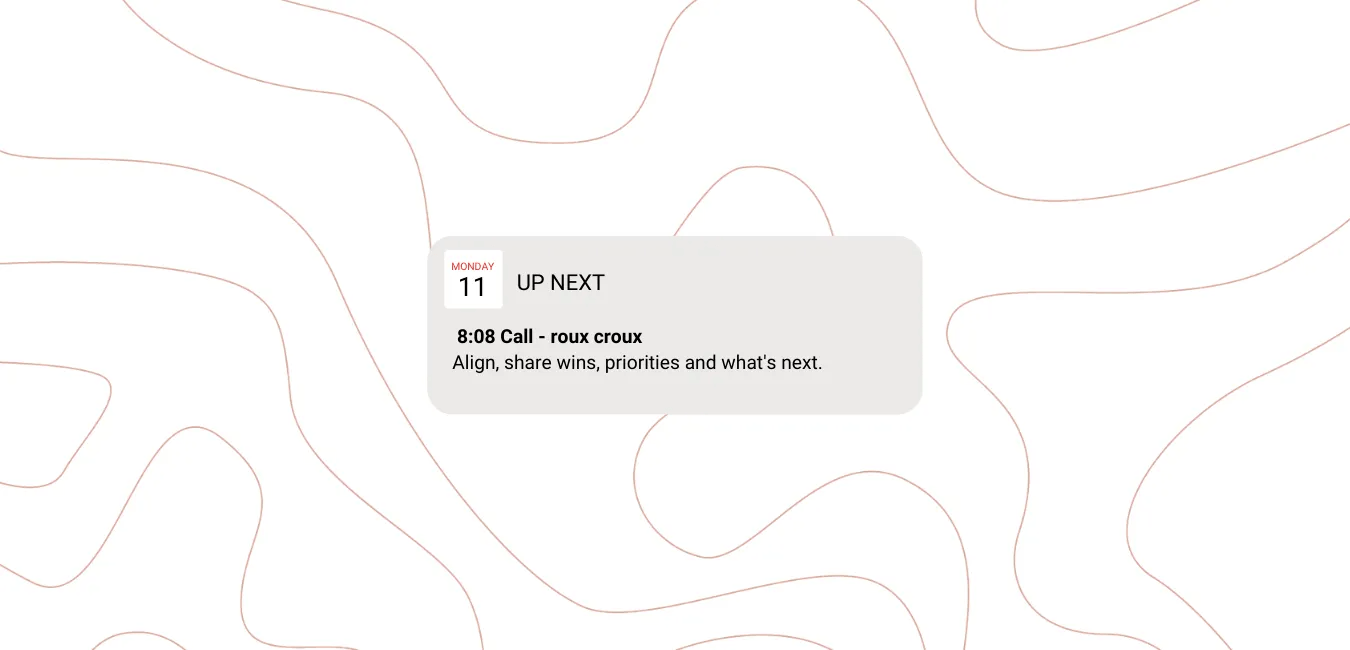
Since the early days of roux, we’ve found success as a team through regular phone calls (and as of 2020, Zoom calls) that help us keep our priorities in line.
We’ve given the calls different nicknames throughout the years—alignments, priority calls, and of course, the 8:08—but the purpose has always been to maintain a rhythm of communication.
In his book, Scaling Up: How a Few Companies Make It...and Why the Rest Don't
, Verne Harnish concludes that the teams who stay aligned and in rhythm with each other are the strongest.
It’s advice we’ve taken to heart, and the results speak for themselves.
So… what is the 8:08?
We’ve always been a flexible company where no one is required to be in the office at any given time, so finding a way to connect as a team is critical. In 2020, as COVID-19 sent us semi-permanently to our home offices, that became even more important.
We have alignment calls throughout the week, from one-on-one calls between myself and each croux member to check-ins with clients. But every morning at 8:08 a.m., all four of our core team members hop on a conference call and take turns sharing wins, celebrations and priorities for the day. Depending on how chatty we are, the call lasts somewhere between 10 to 15 minutes. We keep it short and to-the-point, with each team member sharing their one or two priorities and updating everyone on anything critical they might need to know.
We have alignment calls throughout the week, from one-on-one calls between myself and each croux member to check-ins with clients. But every morning at 8:08 a.m., all four of our core team members hop on a conference call and take turns sharing wins, celebrations and priorities for the day. Depending on how chatty we are, the call lasts somewhere between 10 to 15 minutes. We keep it short and to-the-point, with each team member sharing their one or two priorities and updating everyone on anything critical they might need to know.
Why 8:08?
A daily call could happen at any time, couldn’t it?
We considered an end-of-day call where we would share what we accomplished that day and where our priorities sat going into the next day, but ultimately, it all came down to trust.
We’ve built a strong environment of trust within our core team, and an end-of-day call to see who checked off their to-do’s and who missed a few doesn’t fit that bill.
A morning call makes more sense. It allows everyone to get on the same page before starting their work day, and it affirms the trust that we share.
As far as the specific time? Originally, we knew an off-hour time would be more memorable in the mind, and it moved to 8:08 when I needed an extra 3 minutes to get my kids to the bus stop. Everyone accommodated me, showing their love and how we do life together.
We’ve learned over the years that there’s no magic meeting time—it’s all about making the meeting count.
We considered an end-of-day call where we would share what we accomplished that day and where our priorities sat going into the next day, but ultimately, it all came down to trust.
We’ve built a strong environment of trust within our core team, and an end-of-day call to see who checked off their to-do’s and who missed a few doesn’t fit that bill.
A morning call makes more sense. It allows everyone to get on the same page before starting their work day, and it affirms the trust that we share.
As far as the specific time? Originally, we knew an off-hour time would be more memorable in the mind, and it moved to 8:08 when I needed an extra 3 minutes to get my kids to the bus stop. Everyone accommodated me, showing their love and how we do life together.
We’ve learned over the years that there’s no magic meeting time—it’s all about making the meeting count.